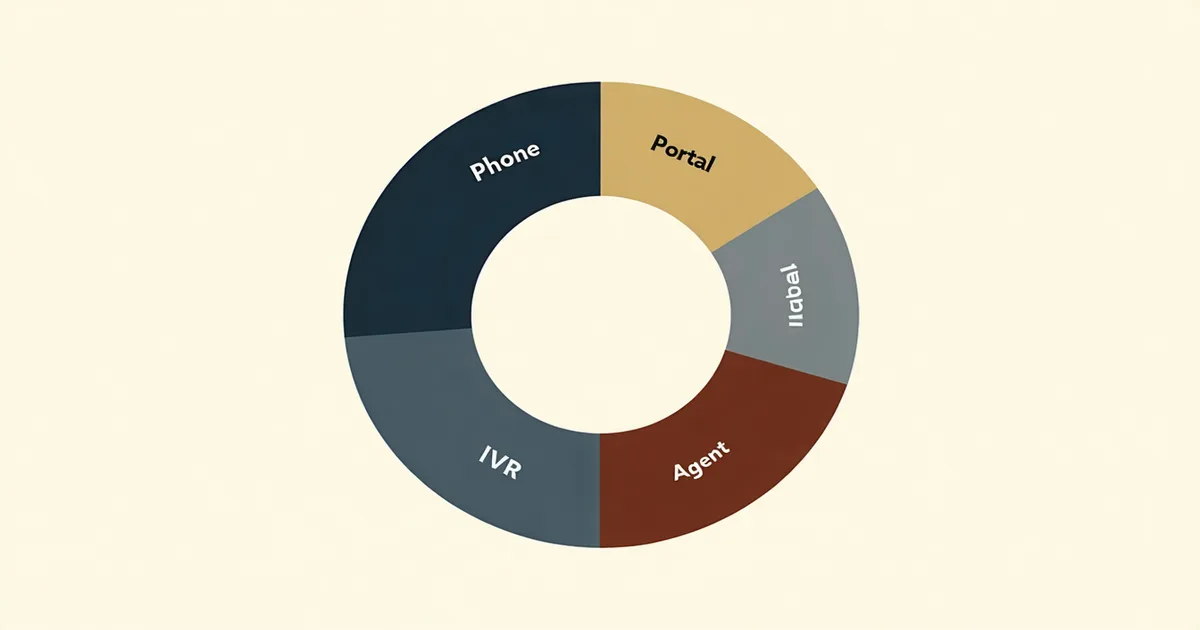
Industry data on FNOL channel mix shows phone remains dominant for commercial lines while web portal adoption has grown sharply in personal auto. Carriers running five intake channels without a common normalization layer are creating structural inconsistency in their first-contact records.

Claims Operations Insights
Practical writing for claims directors, operations leads, and carrier IT teams. Topics span FNOL triage, SIU routing, coverage verification, DOI compliance, and catastrophe preparedness.
Water damage accounts for a significant share of commercial property losses, with severity ranging from minor mitigation to full structural loss. The FNOL record contains enough data to stratify severity — if intake is structured to capture it.
A regional hailstorm or hurricane landfall can multiply FNOL volume by 10x in 48 hours. Carriers that have pre-defined triage rules for CAT conditions don't need to rebuild intake logic after the event has started.
Mobile photo and video submission at FNOL feeds estimation platforms like Mitchell WorkCenter and CCC ONE. Structuring the intake record to carry media references from first contact removes a manual handoff step from the auto claims workflow.
Connecticut General Statutes 38a-816 sets the standard for claim handling timeliness. For carriers with Connecticut policyholders, the intake-to-acknowledgment interval is a regulatory metric — not just an operational KPI.
An SIU referral generated at intake must be defensible. Rule-based routing logic — ISO ClaimSearch thresholds, line-of-business flags, reporting-party patterns — creates a documented decision trail from the first contact.
ACORD standard forms define the data fields that constitute a complete first report. Electronic intake that maps to ACORD field structure ensures the CMS receives a clean, complete record — regardless of which channel the claimant used.
ISO ClaimSearch prior-claim hits, timing anomalies, and incident description patterns are all available at intake. The adjuster who receives the file doesn't have to start from zero on fraud assessment.
When coverage questions surface at the adjuster stage rather than intake, they become disputes. ISO PolicyServices integration at FNOL confirms policy-in-force and coverage type before the file is ever assigned.
State promptness regulations vary, but most require acknowledgment within 10 business days of FNOL — and leading carriers aim for far less. Where does your intake operation stand against current benchmarks?